
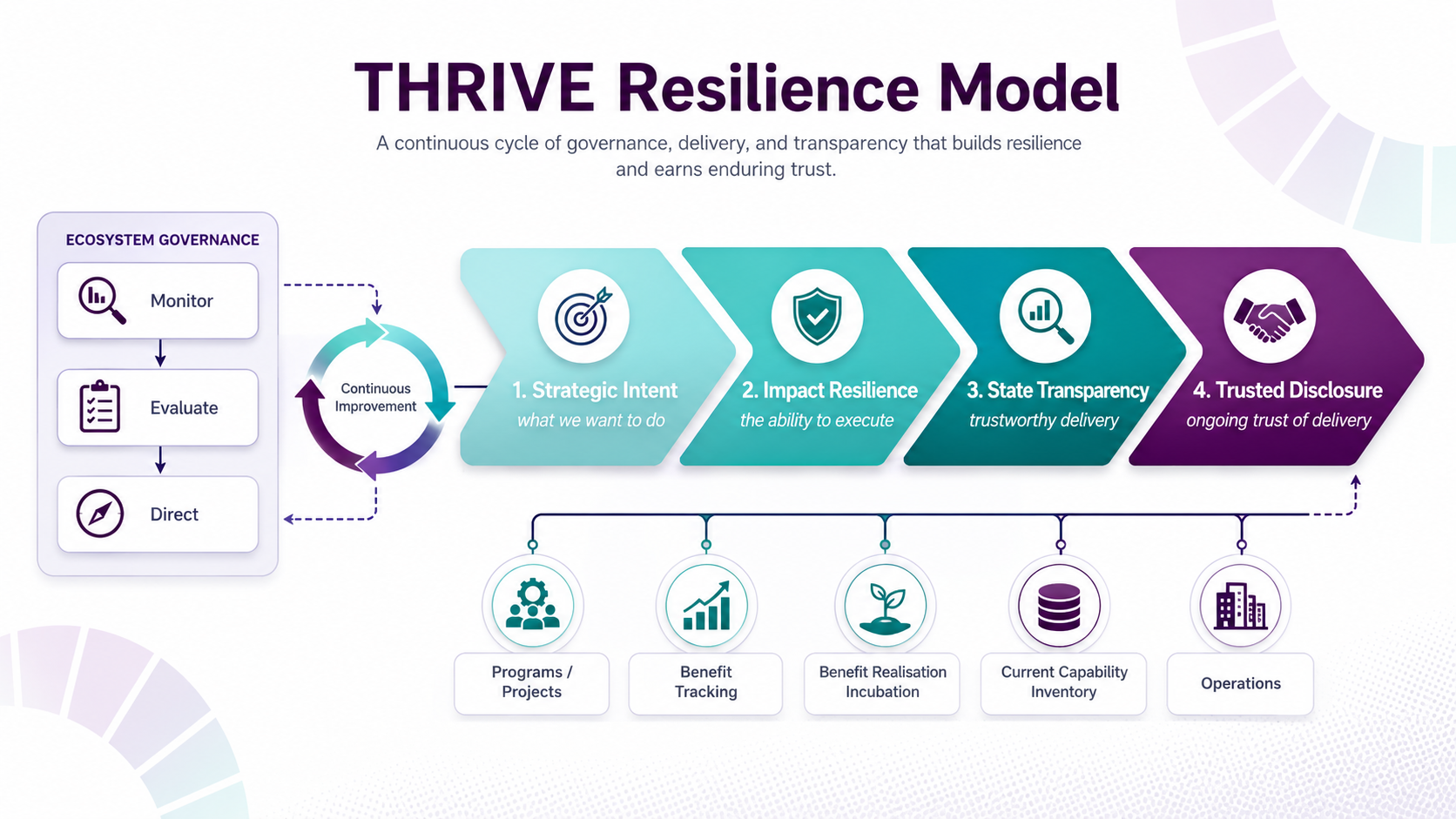
Our services are underpinned by the THRIVE Resilience Model. THRIVE combines the fundamentals of the ISO governance approach — Monitor, Evaluate and Direct — with an enterprise-wide profile of measures that matter. This enables organisations to make informed decisions through regular, timely and trusted business intelligence that measures progress against strategic intent.
By introducing resilience measures, your organisation establishes the foundation for a true enterprise benefits management function. Under THRIVE, benefit realisation is measured through the same resilience measures used to monitor strategic and operational performance. This creates a holistic and consistent approach to benefit measurement, allowing unrealised benefits to be actively:
tracked and reported
protected when they are under threat
incubated when new opportunities emerge to increase benefit value
The result is a practical governance and resilience model that connects strategy, capability, measures and benefits, helping your organisation monitor progress, respond to change and strengthen its ability to thrive over time.
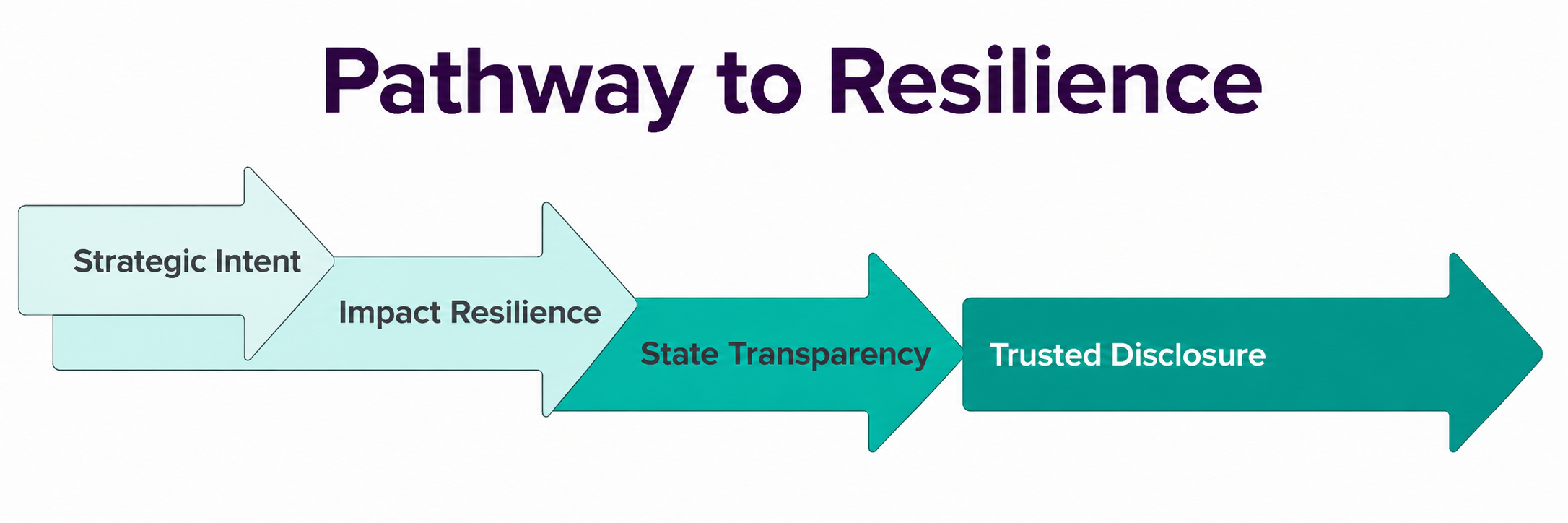
The Pathway to Resilience is a multi-branch maturity pathway that helps organisations build the capabilities required for trusted disclosure of their resilience measures. It recognises that trusted disclosure depends on more than reporting alone — it requires clear strategic intent, the operational ability to execute, and transparent, evidenced delivery.
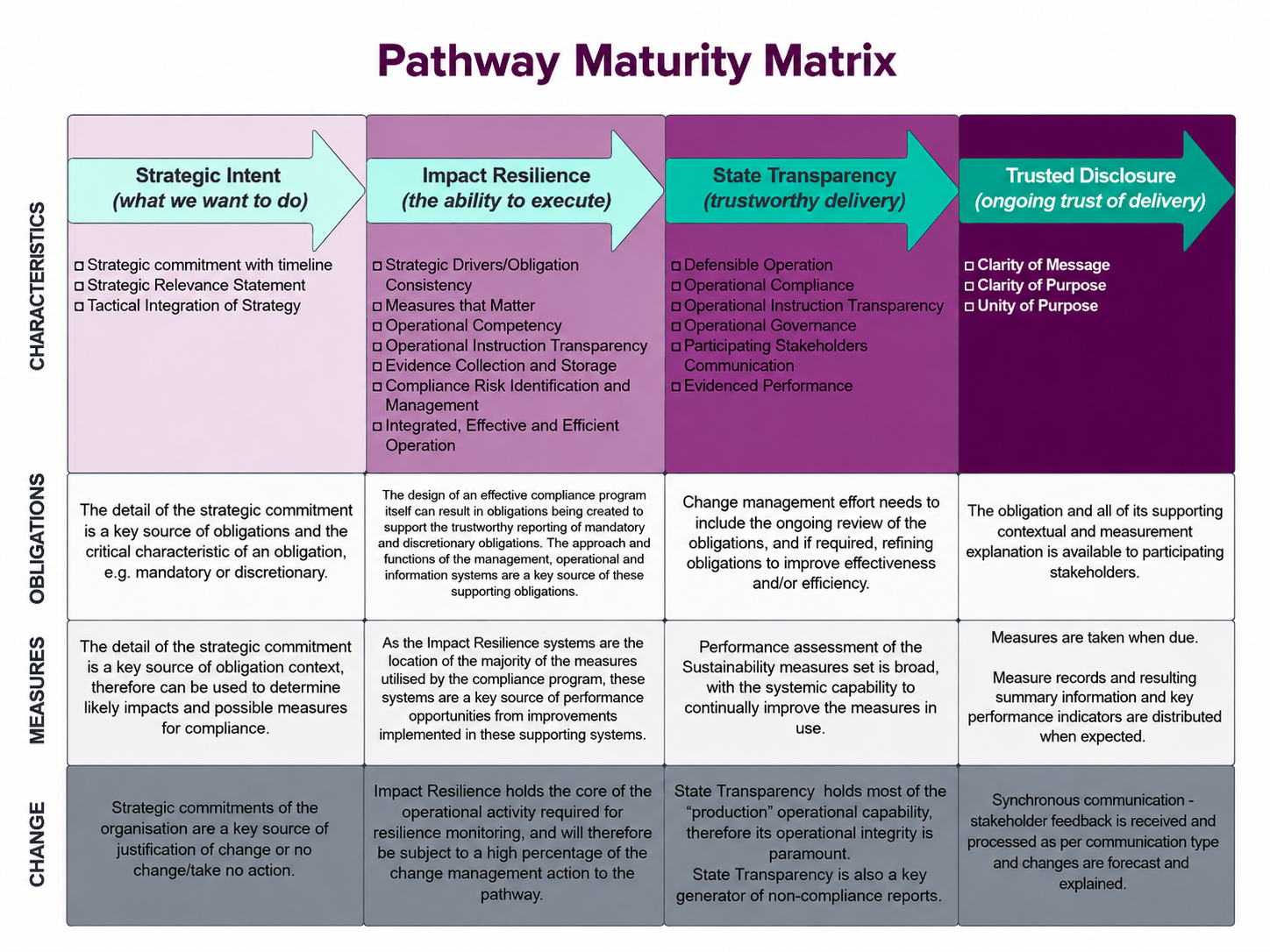
Using our Pathway maturity matrix, we rapidly assess your organisation’s current resilience status and identify the practical actions needed to progress. We then develop action plans using capability-based planning, ESG and resilience measures, benefits realisation and continuous improvement. This turns strategic intent into fit-for-purpose actions, creates trusted business intelligence, tracks whether resilience outcomes are being achieved, and keeps the roadmap current as conditions change.